
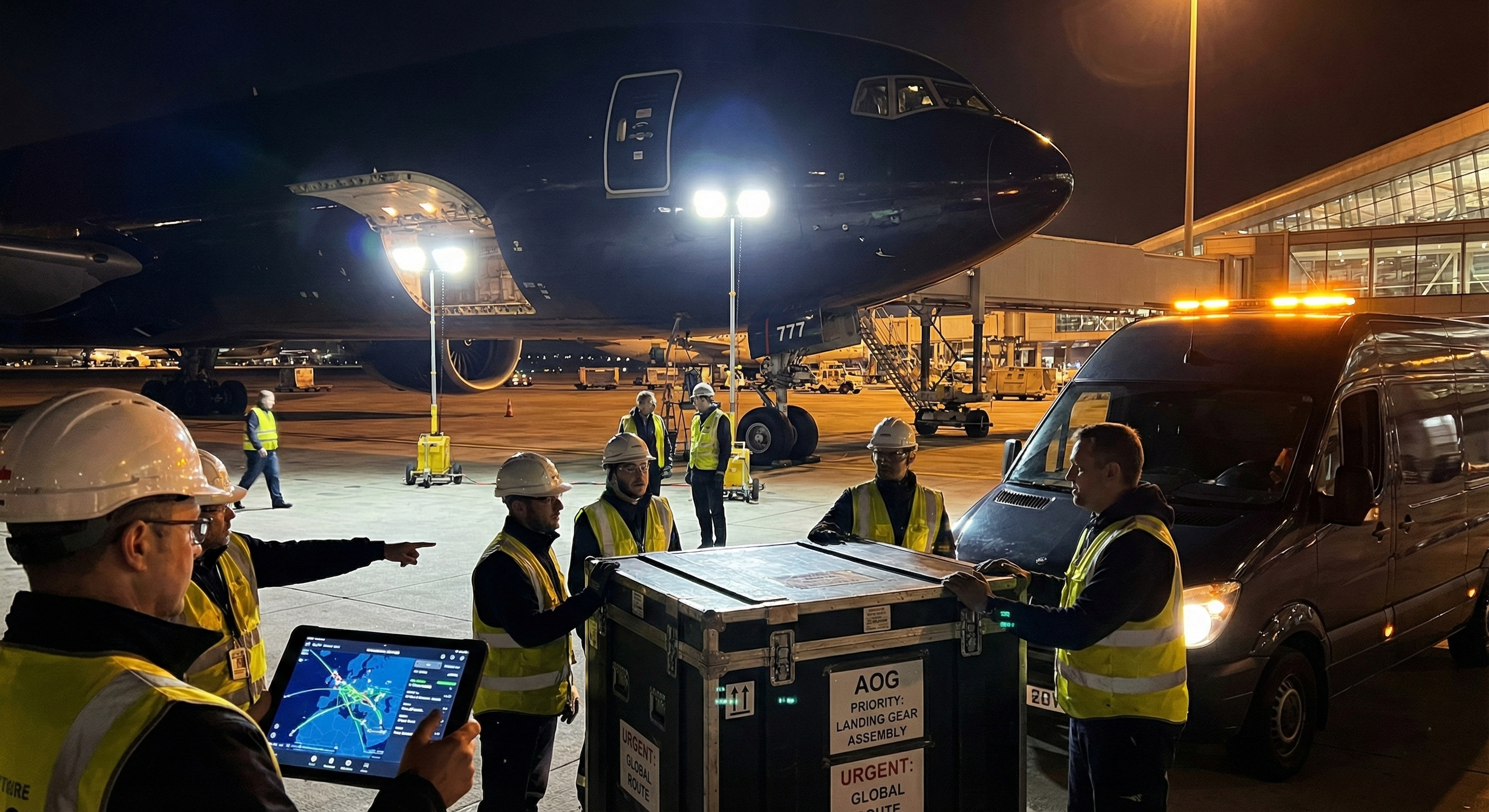
When an airplane is inoperative for technical reasons (known as an AOG [aircraft on ground]), the pressure is significant. Airlines are losing thousands, or even many thousands, of dollars every hour the airplane is out of service. Passengers lose their patience, flight schedules become disordered, and time marches on. While most travelers picture unhappy passengers and anxious airline crew at the gate, few see the next-level, frenetic logistics ballet happening behind the scenes. If you want to know how grounded planes get back in the air—and, more importantly, who actually gets them moving—read on. This is a peek at the real choreography of logistics that gets aircraft moving both airside and landside, ensuring fast re-departure. Let’s look closely at what companies like Universal Clearing & Forwarding (UCF) do when an AOG alert goes off.
Setting Up the Scene: What an AOG Event Is (and Isn’t)
At its core, an AOG event happens when an aircraft can’t fly because of a technical issue. It could be something as minor as a worn tire or as frustrating as a missing sensor or supply part. No matter the cause, until that part gets installed, the aircraft stays put.
For airlines, AOG means more than inconvenience—it means serious losses. They have to pay for rebooking passengers, finding replacement planes, and even shuffling maintenance slots. Sometimes, the losses rack up to tens or hundreds of thousands of dollars per hour. That’s why the urge to solve AOG emergencies is always immediate, and why airlines rely so heavily on logistics teams who turn chaos into a plan.
The First Call: Waking Up the Logistics Team
AOG emergencies happen any time—midnight, long weekends, whenever you least expect them. The moment a notification arrives (say, a critical hydraulic pump fails in Bangalore and only a replacement in Paris will do), the clock starts ticking.
Someone from the airline contacts their logistics partner—like UCF—with one message: “Help, we need this part here yesterday!” There’s no time for standard procedures; this is where genuine expertise shines.
Step One: Identify, Locate, Validate
The first priority is making sure everyone’s talking about the same thing. The part, along with its serial numbers, gets verified for accuracy. Is it off-the-shelf or custom? Is it available and, if so, where? Are there any special packaging demands? Is the part hazardous, temperature-sensitive, or does it need special documentation?
It really can feel like searching for one crucial screw in an ocean of airplane parts.
Once the part is found, it’s time to validate: Does the supplier truly have it? Can it be released now, or are there export controls or extra paperwork holding things up? Experienced forwarders know how to push things through quickly, but always follow the process.
Step Two: Staging the Quickest Route
Here’s where creativity comes alive. The logistics team traces out every possible route, getting the part from storage to the grounded plane.
Every option is considered. Is there a direct flight from the supplier’s city to the destination airport? Would it be faster to drive the part to a nearby airport for a regular flight or even charter a plane? Should this go as general air cargo, or do they need an onboard courier—someone who flies right alongside the package?
Each leg is checked for potential hiccups: customs hours, security, airport delays, even the weather forecast. The objective is always the same—get it there fast, without risk.
Step Three: Conquering the Paperwork Jungle
If you think logistics is just about moving boxes, think again. In aviation, paperwork is the real battleground. One missed stamp or a mistyped number can mean hours or even days of delays.
For AOG, there’s a cascade of forms: export declarations, airway bills, special customs permits, certifications for dangerous goods, and maintenance release documents.
Experienced teams, like those at UCF who know customs processes across hundreds of countries, ensure every form is correct on the first try. They stick with customs portals until every clearance is confirmed.
Step Four: Live Tracking and Managing the Crisis
In AOG cases, nobody sleeps until the package is in the hands of the maintenance crew. Flight delays, traffic jams, and surprise inspections can all pop up.
That’s why they track every part of the shipment in real time and update each stage—sometimes the airline, sometimes the maintenance crew. If a flight is missed or the weather turns bad, the logistics team immediately pivots to the next-best option, whether that’s another flight or cross-border road transport.
Obstacles are normal. Sometimes the part has to wind its way across land, sea, and air—sometimes a last-minute crew change or customs demand means frantic paperwork. The top teams always have backup plans and contacts on the ground ready to help.
Step Five: Customs and the Last Mile
Once the part arrives at the airport, clearing customs becomes the challenge.
Major airports run tight security and regulatory checks, especially for aircraft parts. UCF, with its local know-how, gets the paperwork and protocols handled so no delays hold things back.
After clearance, the mad dash for the “last mile” begins. Whether by van or bike, the part gets rushed from the airport straight to the hangar and handed off directly to the engineers.
The whole operation is more relay race than marathon—you want every minute to count, from the warehouse shelf right to the mechanic’s hands.
How Skilled Logistics Changes the Outcome
Getting a grounded plane flying again isn’t luck—it’s skill, speed, and the right connections. Here’s what sets a top logistics provider apart in high-pressure moments:
- Deep knowledge of customs requirements across different countries means fewer unexpected issues.
- A professional network that reaches nearly every corner of the globe, so alternative routes can be found in a pinch.
- Real-time updates and monitoring, keeping everyone informed step by step.
- Solid relationships with courier and airport officials, which help get things done after hours.
- Hard-won experience dealing with weather, paperwork glitches, and sudden changes in regulation, so costly errors are less likely.
A Real-Life Account
Here’s a simple snapshot. Imagine a cargo jet stuck in Bangalore because a navigation module gave out. The replacements in Singapore. The call for help goes out at 2 a.m.; the next scheduled flight isn’t till 10 a.m., meaning twelve costly hours on the ground.
A seasoned logistics partner like UCF springs into action. They’ll arrange a dedicated onboard courier on the earliest possible flight, secure emergency customs clearance both ways, and stage a rapid hand-off at Bangalore’s airport. The part is installed and the jet gets back in the air much earlier than the worst-case scenario, all because a series of small but essential steps happened quickly and correctly.
Why Relationships Matter
One of the most valuable but least visible assets in AOG logistics is strong relationships. Customs and government officials move faster for clearing agents they trust. Maintenance crews depend on quick, reliable updates. Forwarders who’ve spent years building these partnerships can make even the toughest requests happen—because the right phone call at the right time really matters.
Taking a Closer Look: The Unseen Detail
At first glance, AOG logistics might look like moving a package from point A to point B. Really, it’s about managing a ton of tasks almost at once, across time zones, languages, and bureaucracies.
It’s a customs broker staying up until 3 a.m. to push the right paperwork. It’s a ground team sprinting to grab a package off the tarmac. It’s a vendor hustling to the warehouse late at night to release a critical shipment. The magic of logistics is that none of this happens by accident.
The best providers build these abilities step by step—hiring sharp people, investing in the right tech, setting up local offices, and building strong global connections. When it works well, nobody outside that world notices. When something fails, everything gets messy.
Concluding Thoughts: Why AOG Logistics Matters
Few consider the reality of what happens when a plane is grounded unexpectedly. However, next time you travel and observe the discreet rooting choreography keeping the airline on time, keep in mind that a logistics team somewhere delivered the appropriate piece at just the right time.
AOG emergencies are proof of how connected the world is, and why experienced partners are key to keeping our lives and businesses moving smoothly. Companies like UCF operate in this invisible world, turning potential crises into routine wins, day after day.
This is the reality of an AOG event: constant urgency, ongoing teamwork, and a ton of skill blended together to take care of all the unseen details—keeping passengers, cargo, and business moving forward.